Connected home product line
Starting from the dial
At OOOH Studio I directed the design of Nsure's connected home range. They wanted the smart home to be a commodity, sold to people who are not shopping for one, and that puts a real constraint on the design. Because of this we anchored the whole line on the rotary thermostat everybody already knows how to use.
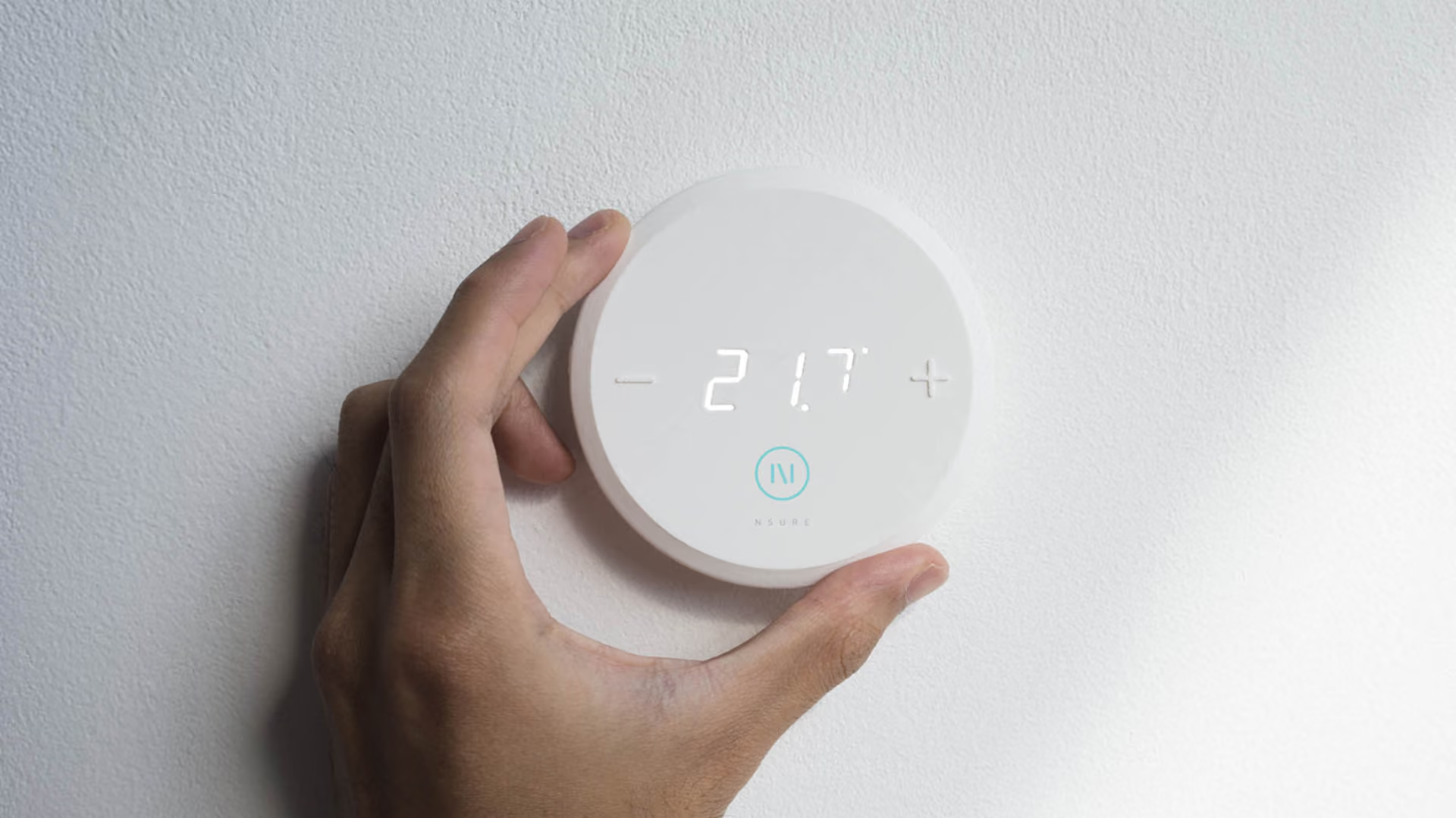
01 · A commodity, not a hobby
Fewer parts, less screen
A connected home product at the time was sold to enthusiasts. They will happily learn an interface to get a feature, and most of them were already buying.
Nsure wanted the other group. Affordable means fewer components, less screen and tighter tooling, and the people buying it already have a thermostat on the wall that works.
So the interface had to be obvious to somebody who never asked for a smart home, on a product with almost no room to explain itself.
Analogue thermostats work by grabbing, holding and twisting, which is an interaction nobody needs taught.
02 · Butler
A dial with touch behind it
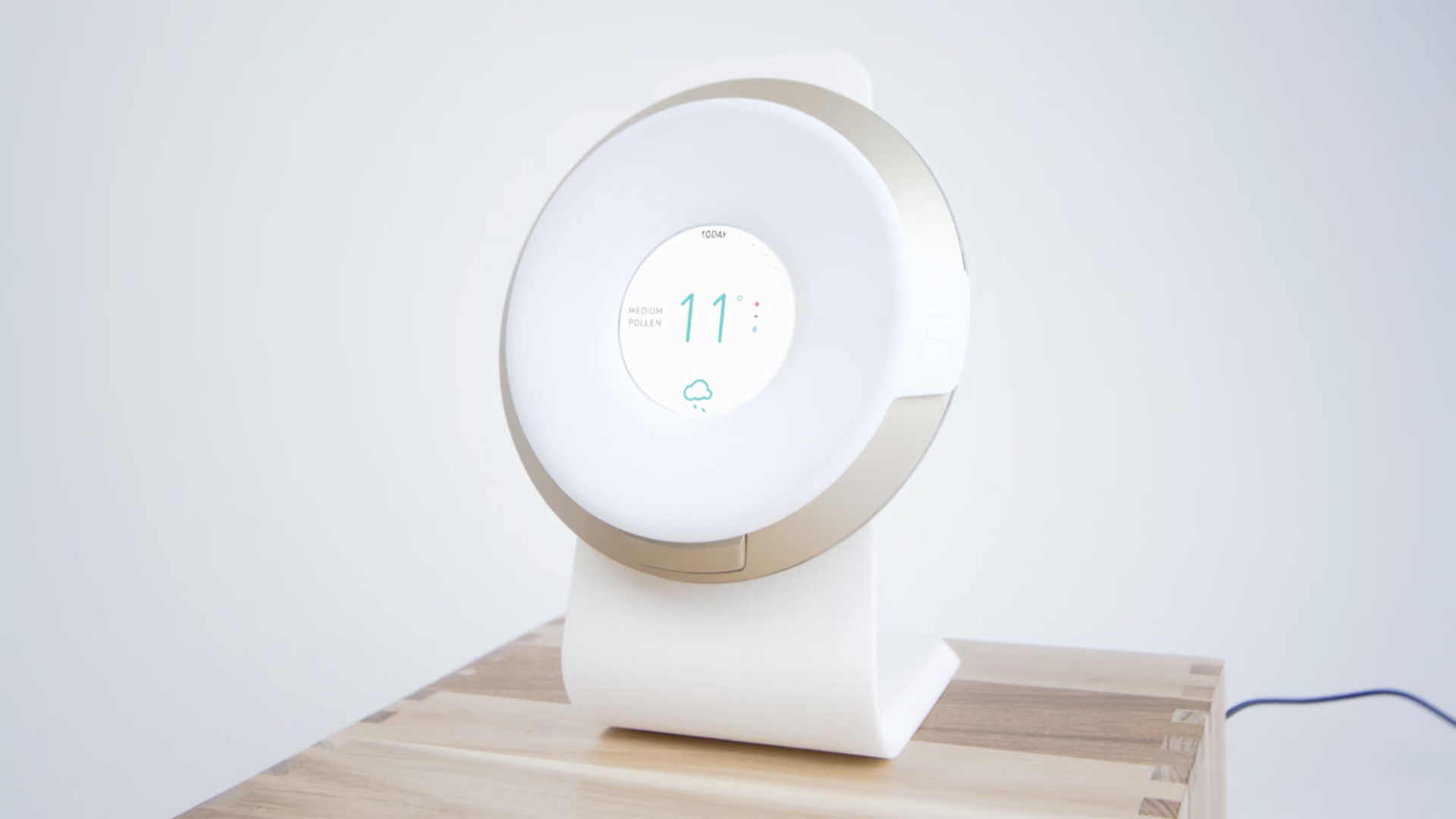
For Butler I combined the two. The rotary body carries the things people do every day, and a touch layer carries everything the dial cannot express.
Touchscreens open up far more and ask you to learn all of it. However, the split keeps quick access to every setting while holding one overview, so nobody gets lost inside the options.
Every icon points at something in your house. A heater for temperature, a fan for air quality, a plug for consumption, so the digital functions read without a manual.
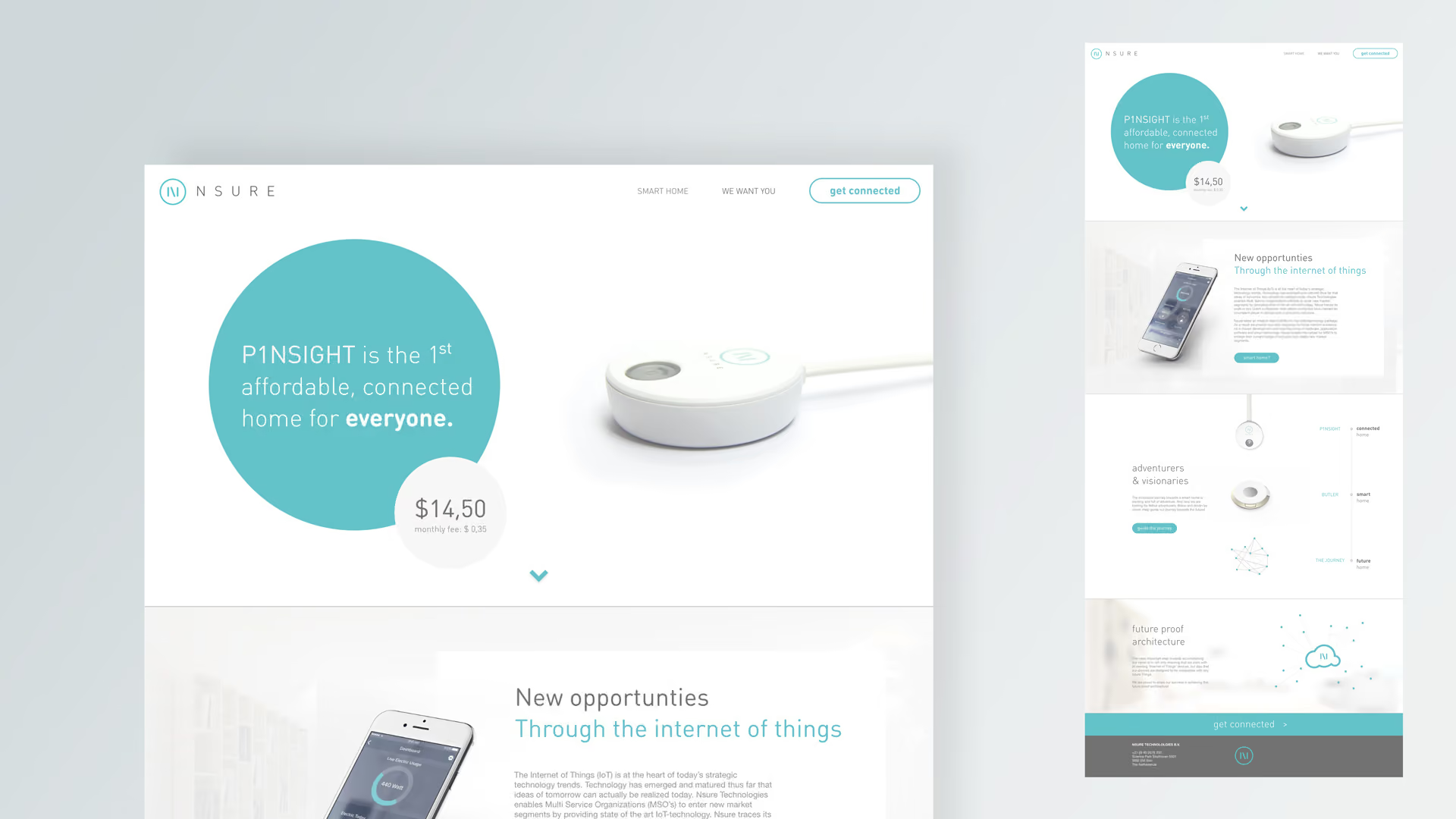
I directed the line across industrial design, service and interaction design, UI, the electronics for the interactive demonstrator, branding and web. The logo is books on a shelf with one tipped playfully over.
The dial stayed, even though it costs more than a flat touch panel, because it is the one thing that made the product legible to the people Nsure was trying to reach.
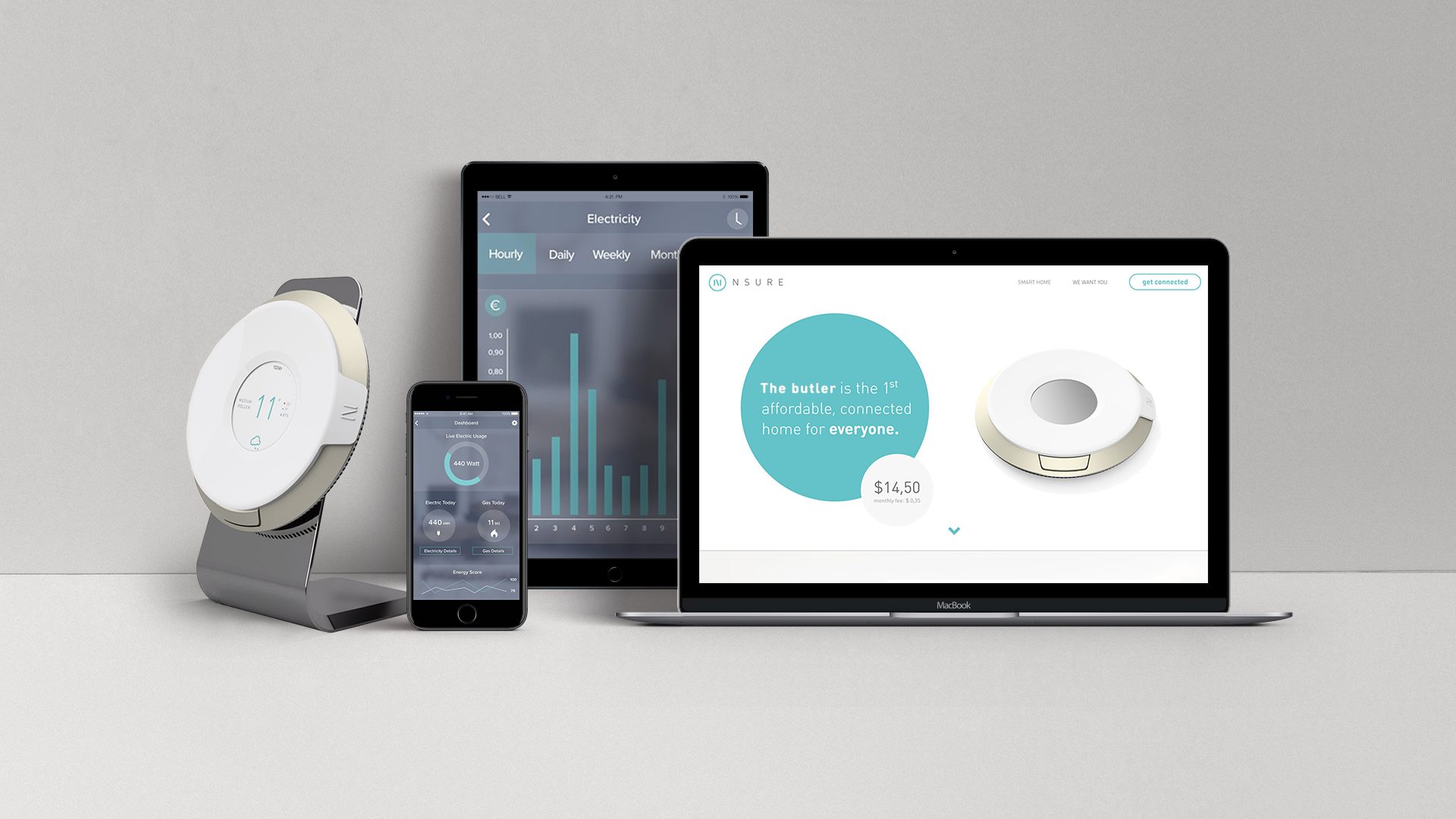
03 · Butler, Piccolo and the P1
Shipped under another brand
The line ran from the Butler thermostat to its successor the Piccolo, paired with the P1 dongle that reads the meter.
Alongside the products I delivered the visual identity and the styles for online and offline media, the website, an interactive demonstrator used in sales conversations, and video. 3D Systems produced the sales model and OOOH Studio handled the packaging.
Anchoring on the dial took the learning curve out of the buying decision. That is the same reason it survived a unit cost review it should have lost.
The line reached production with the packaging finished. Then a large energy company bought it to sell as their own, adapted it to their house style and shipped it, dial included.
Specification
Detail
What it delivered
The interaction
A rotary body for the everyday settings, with a touch layer behind it for the rest, so there is nothing new to learn.
No manual needed
It has to be cheap
Fewer components, less screen and tighter tooling, because in this market the price is what decides the sale.
A commodity price
The range
Butler, then the Piccolo with the P1 dongle reading the meter, with one identity across product, web and packaging.
One family