My startup / patented product
Sound you can grab
Tingle was my own company, built around a handheld instrument that gives digital sound its physical feel back. I designed it, patented the sensing, engineered it for manufacture and took it to market. It got into the HighTechXL accelerator, and that is also where I chose to close it.
01 · Dials and sliders
Controls from the 1950s
Digital music is made with software, and the software is driven with hardware that came off studio desks in the 1950s. Dials, sliders, buttons.
Everything that makes an acoustic instrument expressive got dropped along the way. The bending, the hitting, the shaking, the sliding and the plucking.
Watching somebody play a laptop also gives an audience very little to look at, so the show tends to come from somewhere other than the instrument. Beginners feel that most, and music lessons were being cut in schools at the time.
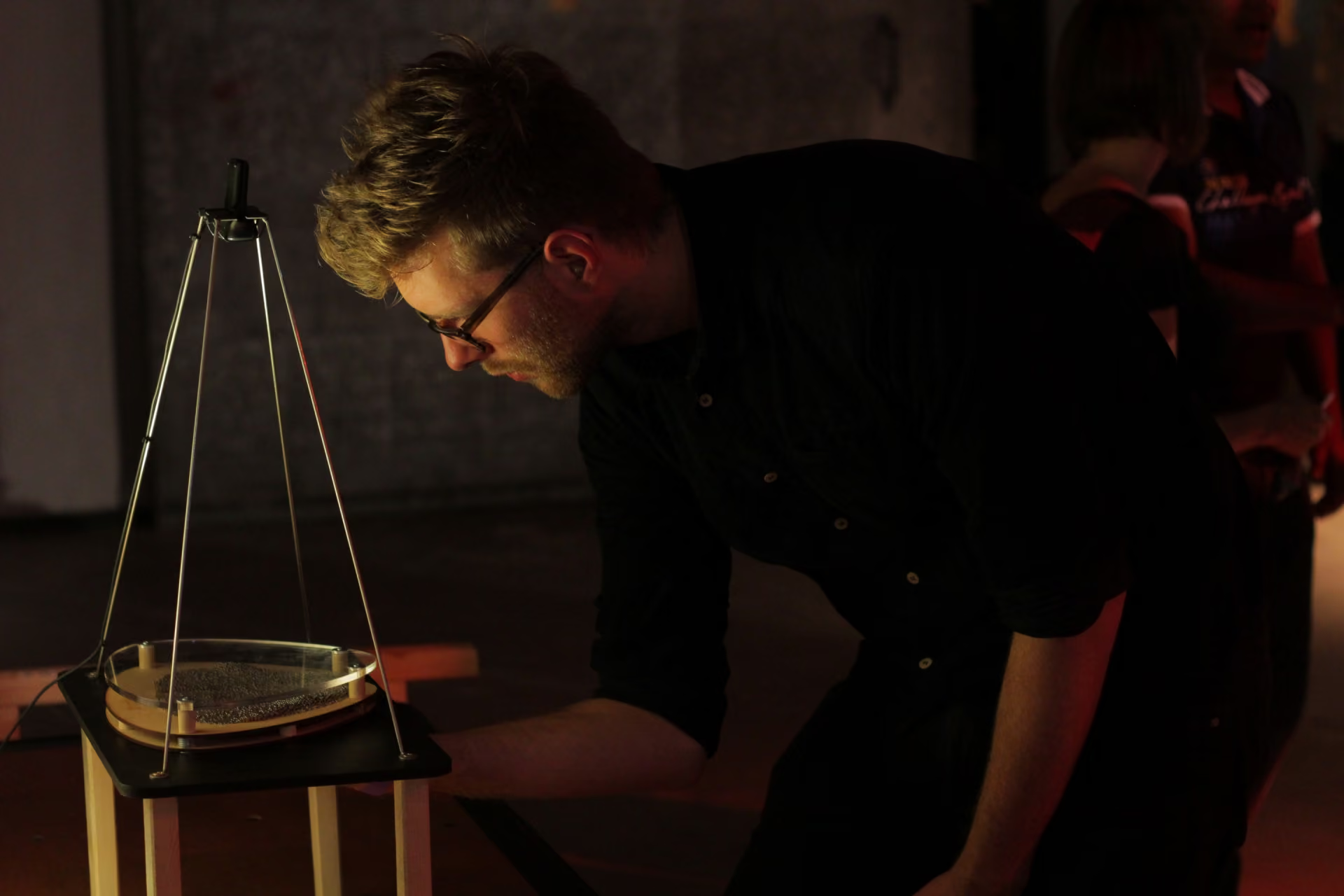
The question I started from was what happens if you can see sound, take hold of it, and push it into a new shape.
02 · Testing on teenagers
Letting the kids choose
The concept came out of an exploration of synaesthesia. I sketched widely, picked three directions, and then took a job as a music teacher at a lower-secondary school, because those were the users I cared about and I wanted them doing the choosing.
They chose the pin-art direction. It looked like the sound visualisers they already knew from a screen, only physical, so the link between an action and a sound needed no explaining.
I built a technical prototype using image recognition through a webcam mounted over a pin-art toy. Then I redesigned the form into a plectrum shape that was easier to hold and allowed more abstract sound mapping.
The webcam prototype worked, and I threw it away. It needed a table mount and controlled light, which no working musician has, so the sensing had to go inside the body. That is the part that became the patent.
03 · Aluminium and polycarbonate
Pins that press back
Tingle reached market after a full overhaul. Refined shape, selected colours and materials, the electrical engineering finished around the new patent, and the design prepared for manufacture at scale.
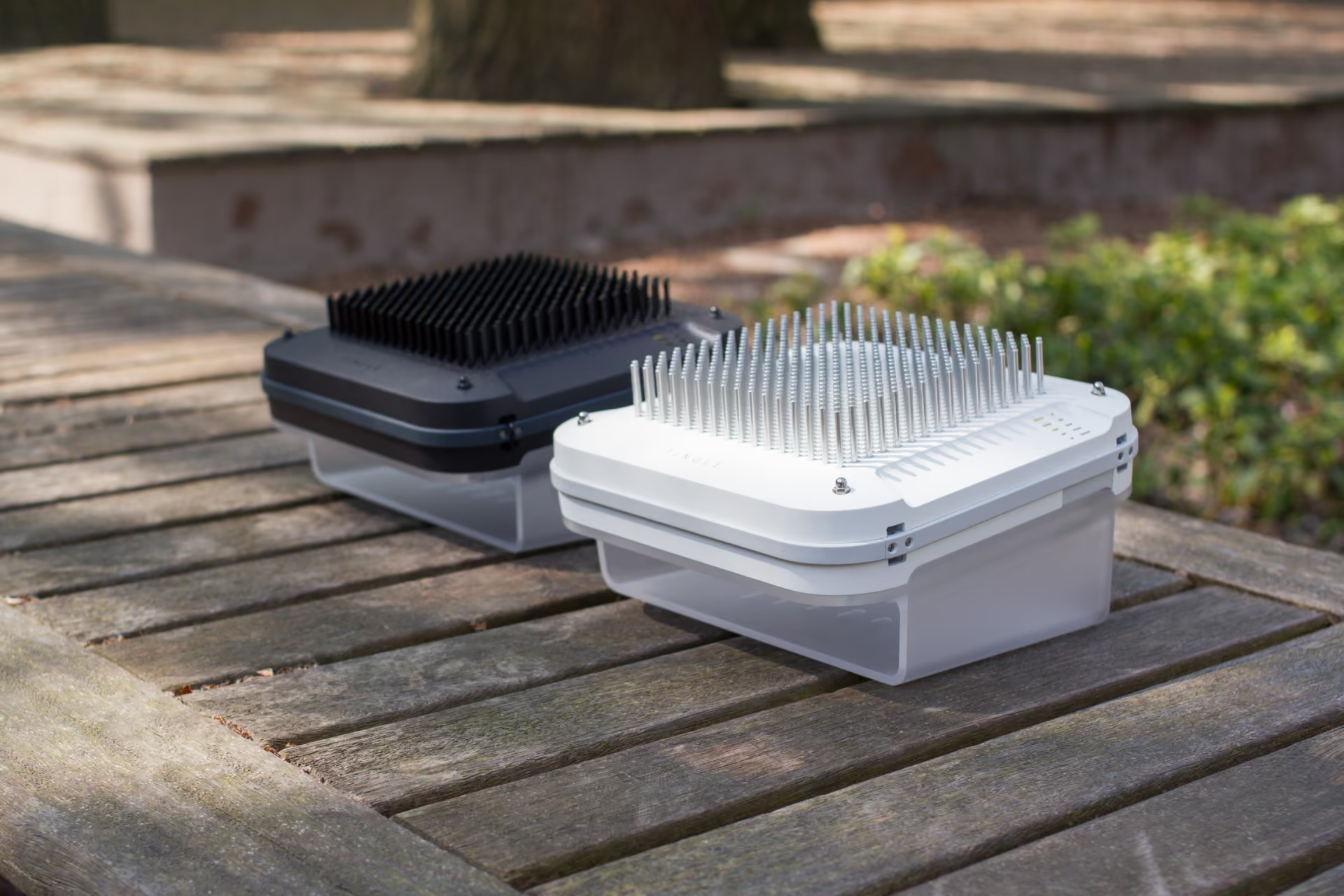
The pins are an aluminium alloy of the kind used in rail coaches and bridges, so the instrument stays light to carry and strong enough for a rough set. The body is polycarbonate for rigidity and impact resistance.
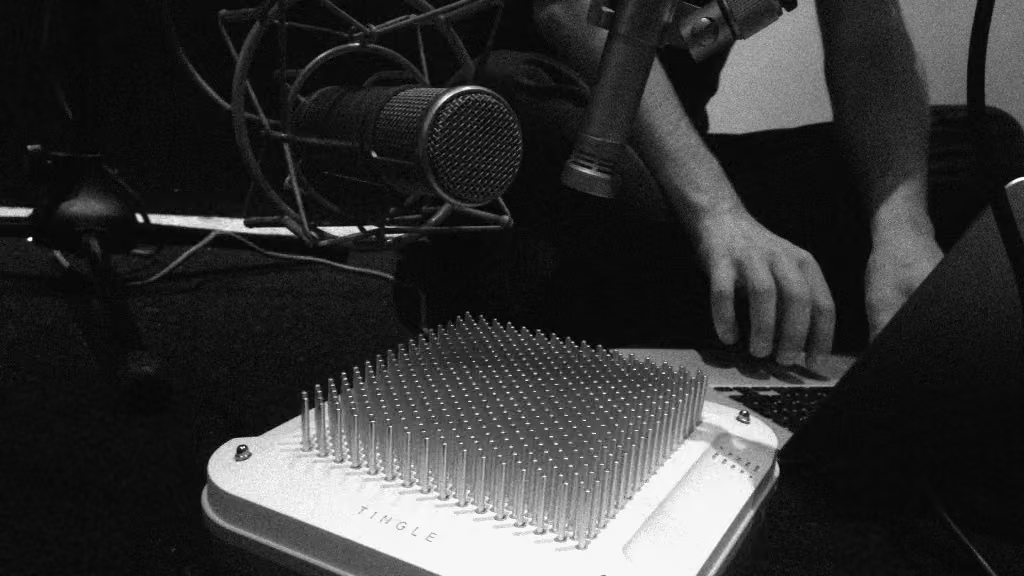
Pins press back against your finger like a piano key. Once enough of them are pressed the body vibrates with the sound, the way a guitar does when you strum it, and tilting it warps the sound.
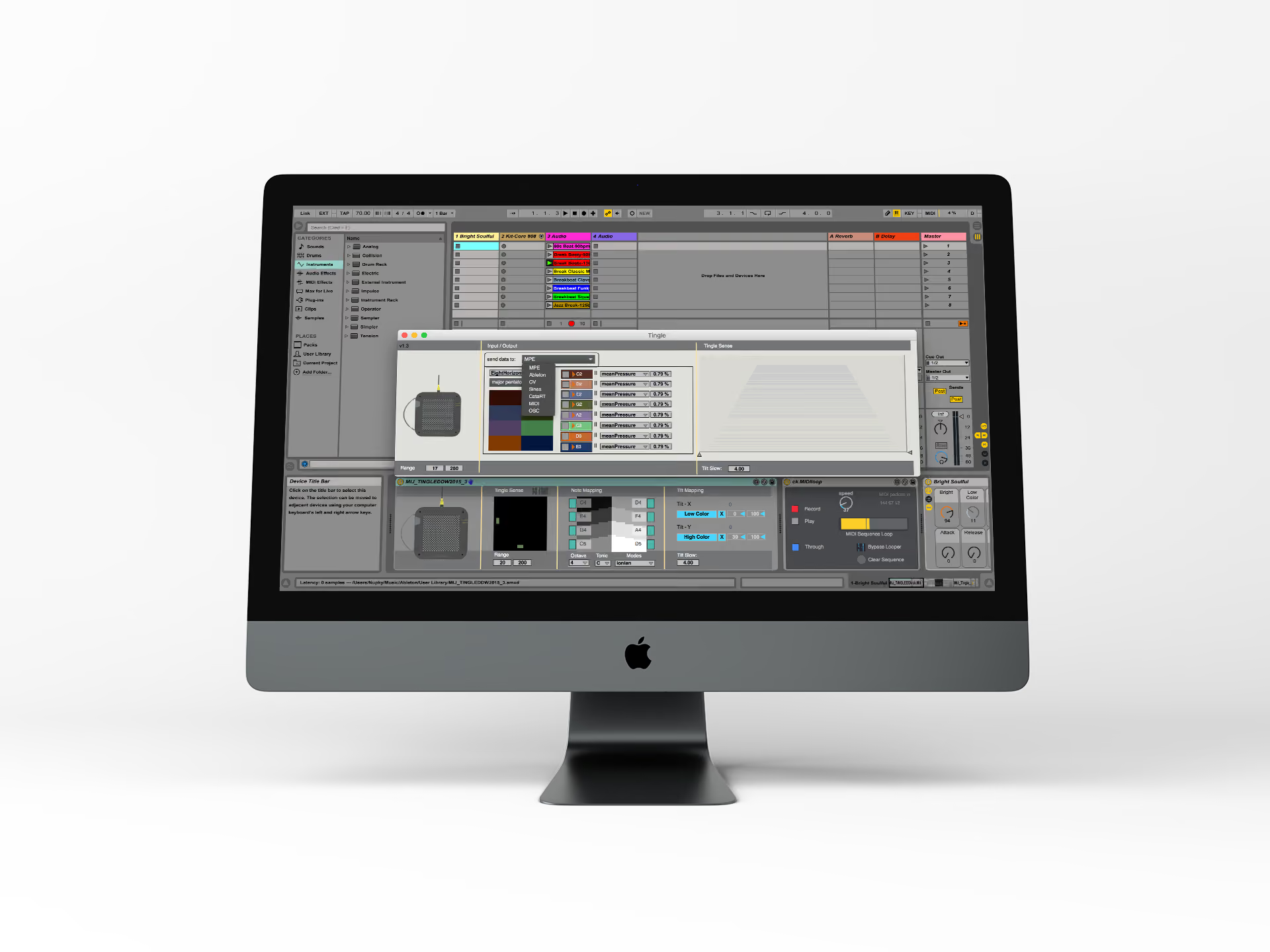
It runs as a MIDI, CV, MPE and OSC controller with its own Max/MSP software, and carries a concatenative granular synthesis algorithm written for it by Diemo Schwarz of IRCAM, published with NIME in 2015. Coverage followed from The Creators Project, Bright, Want.nl and Dutch Design Week.
Digital controllers had settled into competing on feature lists, and expressiveness was the thing musicians would pay for, so that was the part worth protecting. Tingle got into HighTechXL, and I closed the company before the investment landed, because what was in front of me was running a company on a lot of debt and I know myself well enough to know I carry that badly.
Specification
Detail
What it delivered
The patent
Sensing how far each pin is pressed from inside the body, so the instrument works handheld and needs no table or controlled light.
Playable on a stage
It has to survive a set
Pins in the aluminium alloy used for rail coaches and bridges, in a polycarbonate body for rigidity and impact resistance.
Light and tough
Protocols
MIDI, CV, MPE and OSC with its own Max/MSP software, plus a granular synthesis algorithm written for it at IRCAM.
Fits any studio