Product strategy

Pivoting to a one-stop-shop

Digging into recent tender losses showed that competitors were leading their pitch with a non-touch screen, a product i3CONNECT didn’t make. To compete, I shifted the company strategy from selling touch screens to selling complete room solutions.
Client
i3CONNECT
My role
Market analysis, product discovery, naming, sales enablement
Years
2023 to now
Output
Market model, PIM, competitor database, Cactus, Studio OPS, Walnut and Sequoia
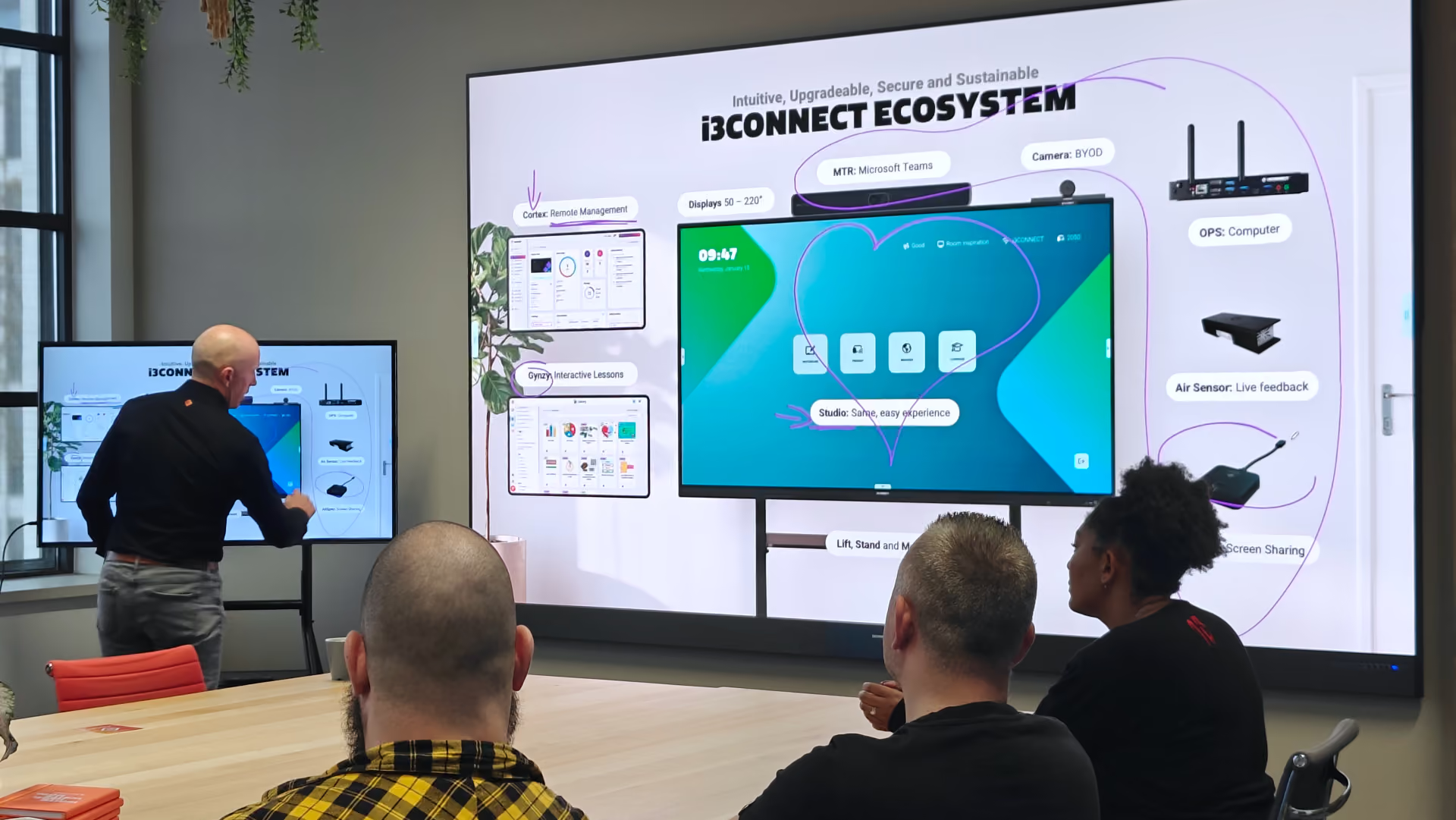
A man drawing over a presentation about the i3CONNECT ecosystem that is being enlarged on a large LED wall display while others watch
01 · Challenge

Losing tenders to cheaper brands

Touch displays are usually sold into meeting rooms and classrooms through a tender. When i3CONNECT started losing those tenders to cheaper brands, I worked with the sales team to find out why.
When the company started, a hardened glass touch display cost about the same as a non-touch one. Since then, the factories we bought from started selling their own displays straight into our market, and the price gap grew. Customers were fitting out a room with non-touch screens by default, as the difference in price wasn't enough reason to add touch.
02 · Approach

Deciding on data

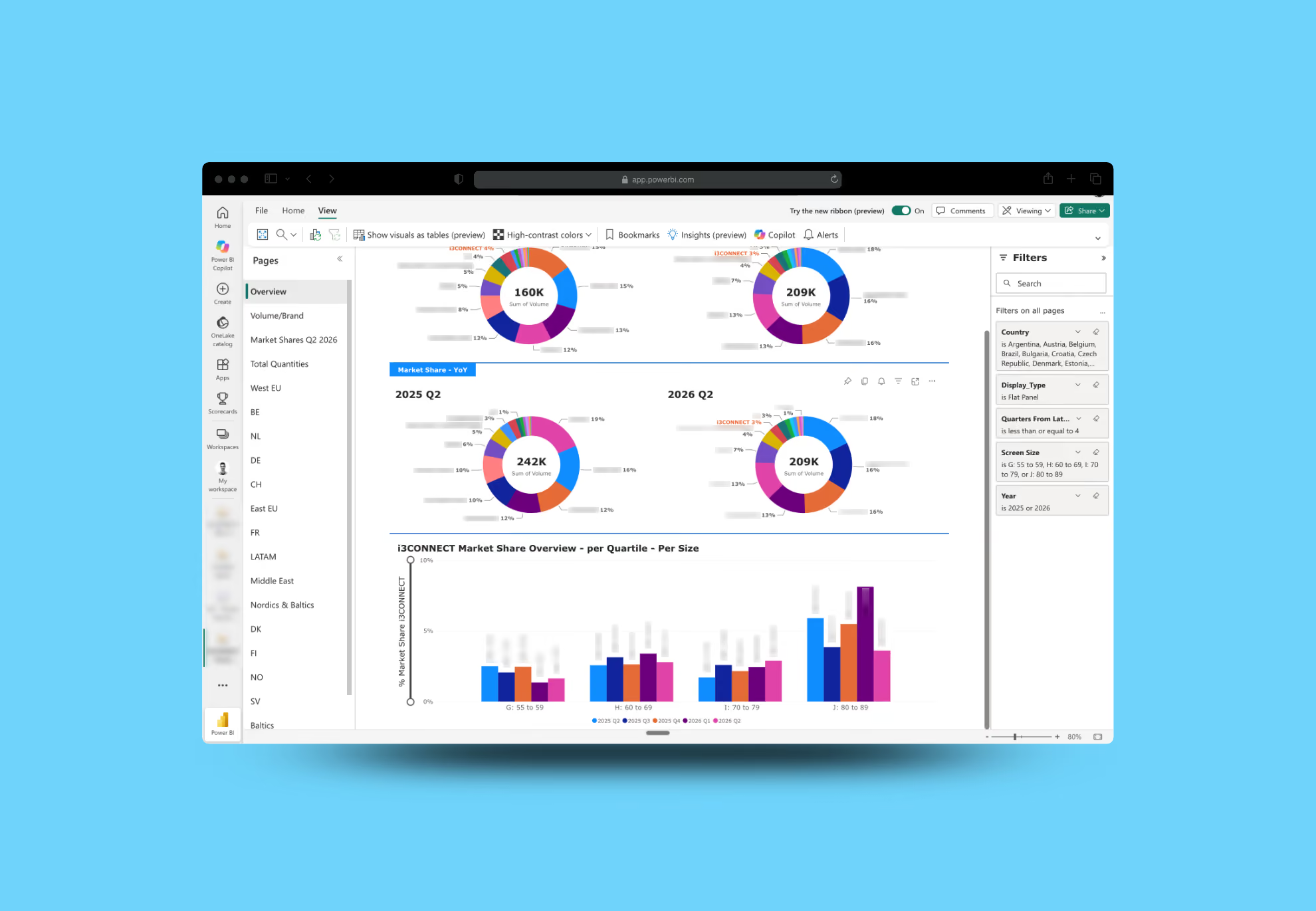
Before picking a direction, we had to be sure our niche in touch was the cause. I built a Power BI dashboard based on Futuresource’s AV market data and linked it to a rich product information system I’d built, which held the specs of every product we sold, and also those of our competitors. Then I compared this data to the ideas and input gathered.
This research showed that the entire market was being affected, and the few that were succeeding were using non-touch as a way to win a tender.
Up until now, the company never dared explore beyond touch-displays because they could not compete on the same scale as TV manufacturers. However, with this research my advice became to widen the product range so that many different rooms could be filled within our one ecosystem. To become a one-stop-shop, where touch-displays were an option.
Specification
What I built
What it delivered

Market data

A Power BI dashboard built on FutureSource market data, split by region and by quarter to spot trends.
Defining the painpoint

Product data

A PIM holding the specifications of every product we sell, as well as that of our competition.
Creating A source of truth

Ranking ideas

A Jira Product Discovery list which ranks all input from colleauges, partners and customers by Reach, Impact, Confidence and Effort to get a RICE score.
Deciding without emotion
A dashboard made in Power BI showing market data in the AV industry
03 · The range

Every room behaving the same

IT teams maintain the computers and network, and don't have time to also take care of the various displays being used. Each display brand has its own user interface and management portal, and requires updates to stay secure. It's a hassle, so they often disable everything on the screen and add an extra device that provides the main interface (Teams Rooms or a wireless casting device). This becomes the one thing to manage.
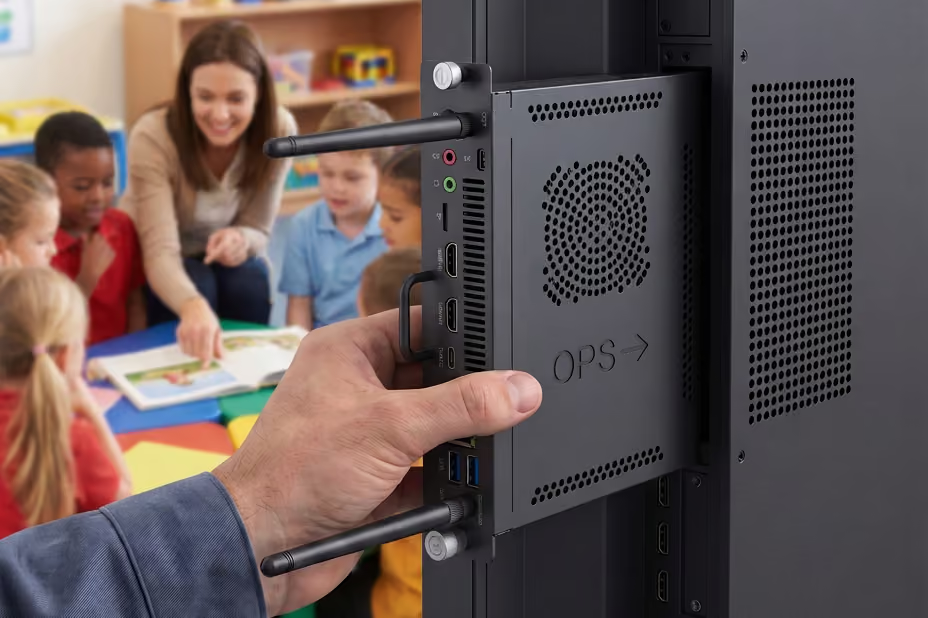
An OPS computer is slid into a display to upgrade it to the new studio experience as provided by i3CONNECT.

Installed base

The first product I recommended was Studio OPS. It’s a mini PC that slides into any professional display, ours or a competitor’s, and installs the user interface (Studio) onto that screen and allows it to be managed with Cortex.  
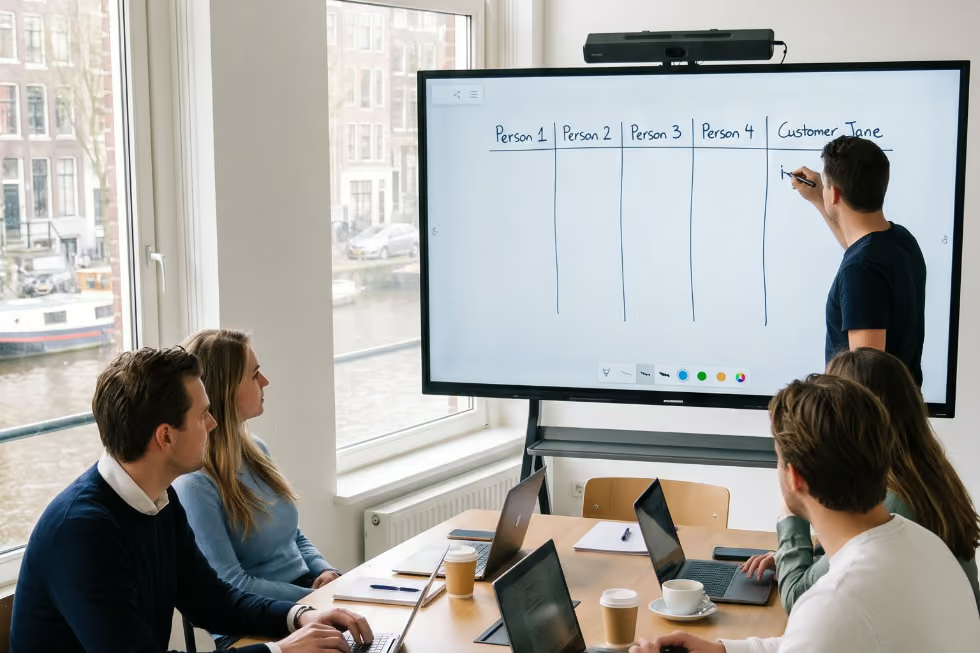
A man running a brainstorm in a teen's call, just outside a river in Amsterdam, in a meeting room

Meeting rooms

The next product I recommended was Cactus, our first non-touch display. It filled the gap that the tender data showed us for signage and meeting room displays. At the same time we would release a touch-display upgrade fro hybrid calls, to act as the upsell. Aspen 4 MTR enabled collaboration in calls using whiteboards and more.
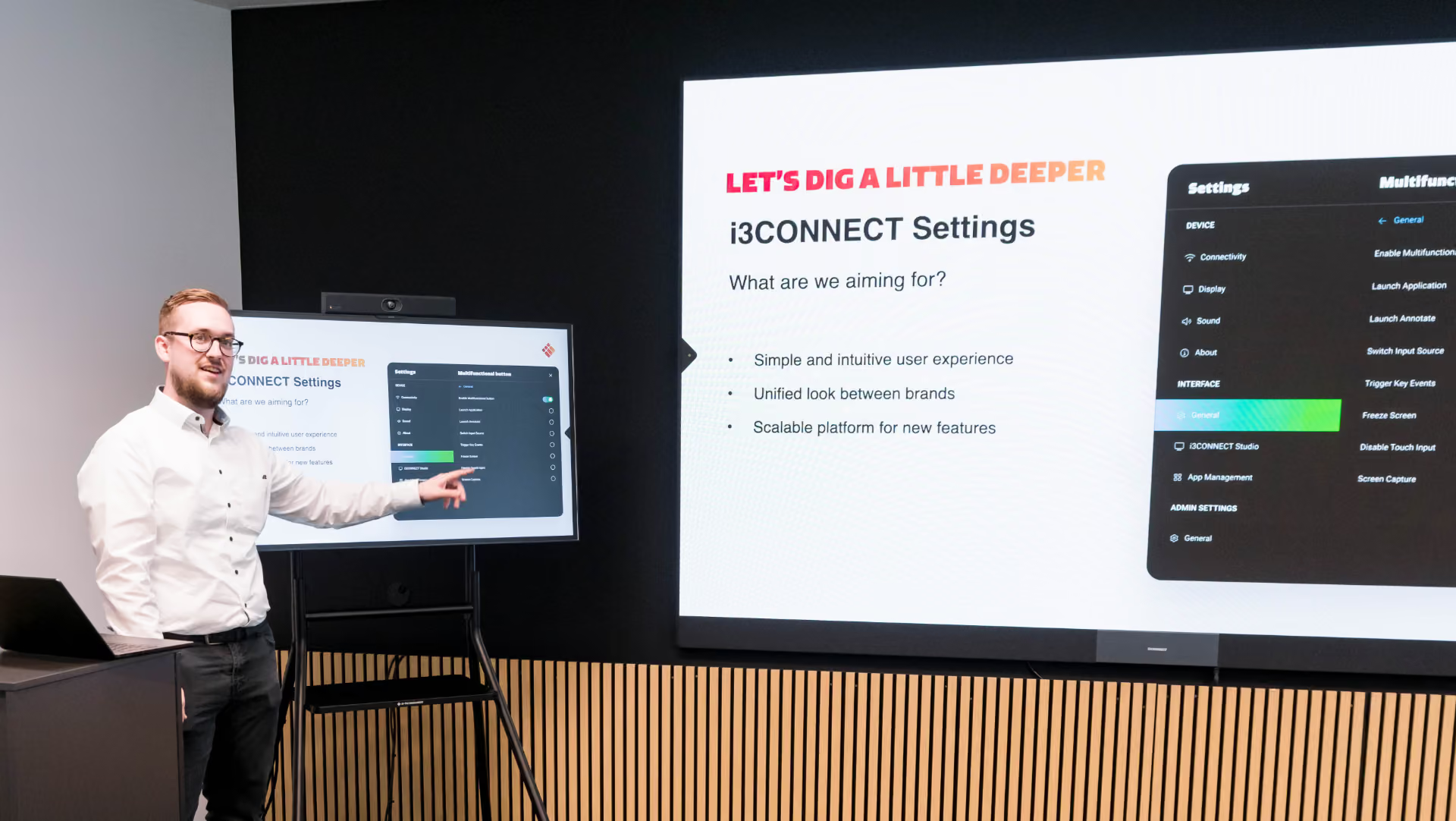
A man in glasses and a white shirt stands and points at a screen displaying i3CONNECT Settings with goals: simple user experience, unified brand look, scalable platform.

Presentation halls

Lastly, we combined a non-touch LED wall (Walnut) with a person-sized digital flipchart (Sequoia) to act as a podium solution. You swipe through slides and annotate over them on the small Sequoia and the room can follow allong on the Walnut behind you.

04 · Go to Market

Filling the room

Commercially, it’s a one-stop shop: signage in the hallways, non-touch screens in video-call rooms, and touch where it adds value. To prepare sales for this change in approach, I ran monthly online demo's and trainings for every new product with it's associated sales strategy. The partner portal was rebuilt so that current information was easy to find. And I built an online Academy filled with training videos about our products so that the story of ease and one-stop-shop was told correctly.
Cactus and Studio OPS also came with customers already waiting. We had customers with screens that were no longer receiving security updates and customers who had asked for a non-touch display years earlier. This meant we could hit the ground running, skipping past the standard 9 month funnel. The lower price made it easy to start the conversation, and in doing so naturally lead to upsells to touch-displays.
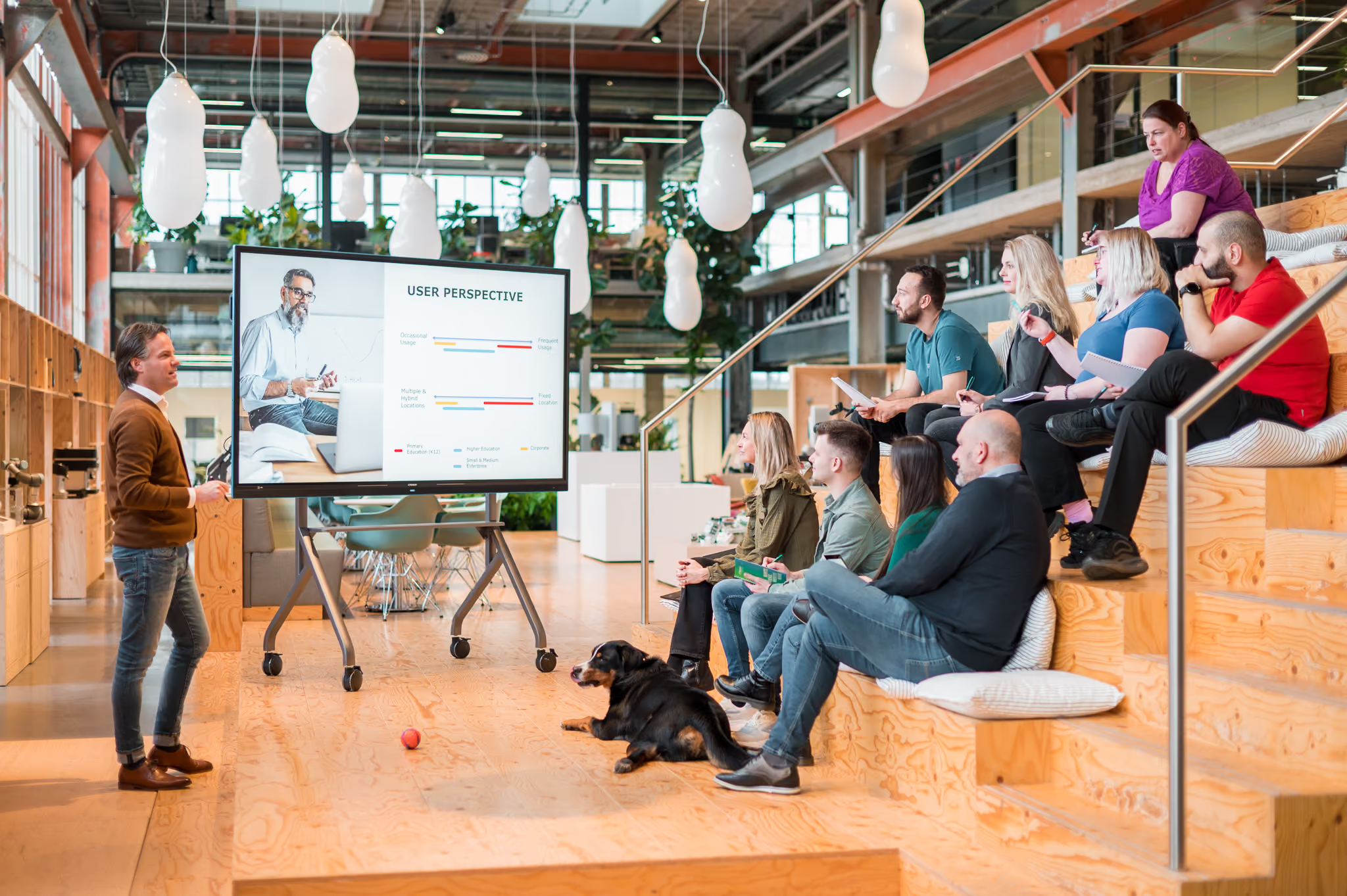
A man gives a presentation in a hole using a touch display, talking about the user's perspective.